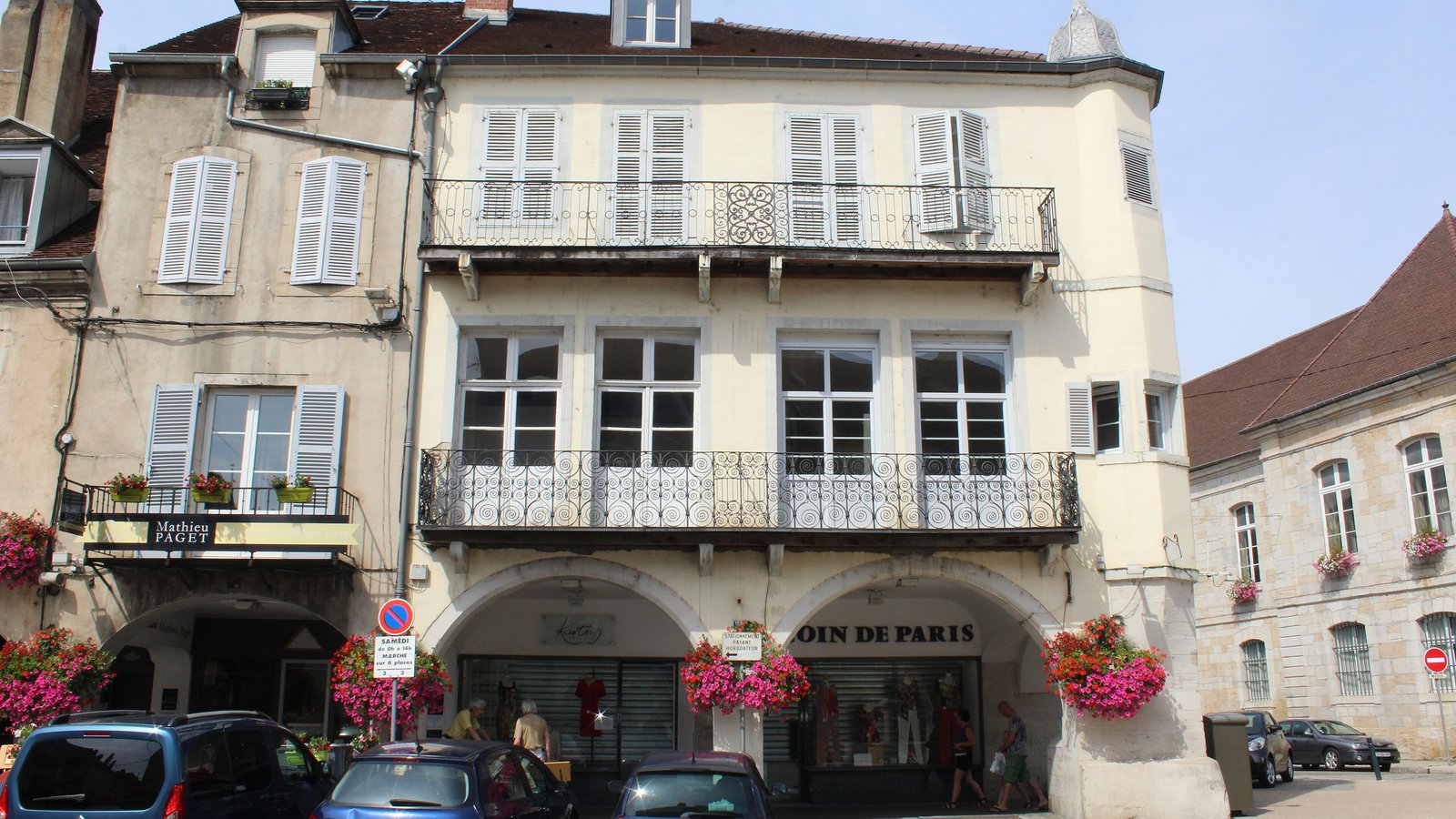
This shop has been bored since the haberdashery closed. What if it became a lovely flat?
A shop closed for years, empty offices, a barn at the bottom of the garden: some properties do not sell because they are locked into their former function. Changing their use can give them a new life, and a new price.
Destination and use: two different notions
In French planning law, the destination of a building is its use class. The Planning Code has five: agriculture and forestry; housing; retail and services; public-interest facilities and public services; other primary, secondary or tertiary activities (offices, industry, warehouses…). Each is divided into sub-classes. Moving from one to another is a change of destination, governed by the local urban plan (PLU).
Use (usage) is a separate rule, which protects housing.
Home turned into an office: the mayor's permission. In towns of more than 200,000 inhabitants and in the Hauts-de-Seine, Seine-Saint-Denis and Val-de-Marne départements, turning a home into an office or professional premises requires prior permission from the mayor, sometimes with compensation.
Other towns may choose to apply this regime: ask at the town hall.
The permissions required
- A change of destination without works to the structure or the façade generally requires a prior declaration (déclaration préalable).
- If it involves works altering the load-bearing structure or the façade, a building permit (permis de construire) is required.
- The PLU may prohibit certain changes, for example to protect ground-floor shops in a shopping street. Hence the value of knowing how to read your town's local urban plan.
The standard processing time depends on the permission:
It can be longer in a protected area, for example near a historic monument.
Some properties are locked into their former function.
The most common conversions
- Shop into a home: common in town centres where shops are closing.
- Offices into flats: worthwhile for vacant office buildings, which can then be sold unit by unit or as a whole.
- Barn or farm building into a dwelling: possible in an agricultural or natural zone only if the PLU designates the building as able to change destination. The application is then subject to the binding opinion of a departmental commission: the one protecting farmland in an agricultural zone, the one for sites in a natural zone.
In a co-ownership building, also reread the co-ownership rules: they may reserve a unit for commercial use or prohibit certain activities. Changing the use of a unit may then require a vote of the general meeting.
An example with figures
A fictitious example, to show the method. A former 60 m² ground-floor shop, closed for several years, in a quiet street with little passing trade. As commercial premises, it attracts only two offers of around €40,000. The PLU does not require retail to be maintained in this street.
In the same street, the DVF database shows older flats selling at around €1,600/m². Converted into a home, the shop could sell for around €96,000, provided the works are funded, costed by quotes, and the shop front is changed, which means applying for permission.
Example with figures: a 60 m² shop converted into a home
| Price as a home (60 m² × €1,600) | ≈ €96,000 |
| Works costed by quotes (in this example) | − €35,000 |
| Best offers as commercial premises | − €40,000 |
| Net difference, before costs | ≈ €21,000 |
And above all, a much wider audience. Had the difference been zero, selling as it stands would have remained the best option.
Why it helps to sell
Empty commercial premises in a quiet street find few takers, like any property unsold for months; converted into a home, they appeal to a much wider market. Conversely, a well-located home may be worth more as professional premises. Checking what the rules allow, before putting the property on the market, changes both its value and its target audience.
The owner does not have to carry out the works themselves. They can obtain the permission before selling, or sell on condition that the buyer obtains it: the buyer then knows exactly what they are buying.
The steps, in order
- Check the building's current destination: previous permits, title deed, town hall.
- Read the PLU rules for the zone, on the Géoportail de l'urbanisme or at the town hall.
- In a co-ownership building, reread the co-ownership rules; in a large city, check the rule on use.
- Have the works costed and compare with a sale as it stands.
- File the prior declaration or the permit application, or provide for a condition precedent in the preliminary sale agreement.
Mistakes to avoid
- Carrying out the works without permission: the property becomes hard to sell, and the irregularity can be penalised.
- Advertising a property as "convertible" without checking the PLU: the buyer will find out, and the sale will fall through.
- Confusing destination and use: an accepted prior declaration does not exempt you from the change-of-use permission where it applies.
- Forgetting the standards for a home: light, ventilation, ceiling height, floor area. A home that is let must meet the decency criteria.
Our approach
We check what the PLU and local rules allow for your property, then assess the value of a change of destination compared with a sale as it stands. See also our page on hard-to-sell properties.
Frequently asked questions
Do you need permission to turn a shop into a home?
Yes: generally a prior declaration, or a building permit if the works affect the structure or the façade.
Can a barn be turned into a house?
Only if the planning rules allow it; in an agricultural or natural zone, the building must be identified by the PLU as able to change destination.
Can you sell a property and leave the buyer to apply?
Yes. The preliminary sale agreement can include a condition precedent that planning permission is obtained: if it is refused, the sale does not go ahead.
How do I find out my property's current destination?
It results from the last planning permission obtained or, failing that, from the actual, long-standing use of the building. The title deed, previous permits and the town hall can confirm it.
Does turning commercial premises into a home require a change-of-use permission?
No: the rule on use protects existing homes. It is turning a home into another use that is controlled, in the towns concerned.
Sounds like your property?
Tell us about it: we look at your case with you, with no commitment.
Get a free opinionRead next