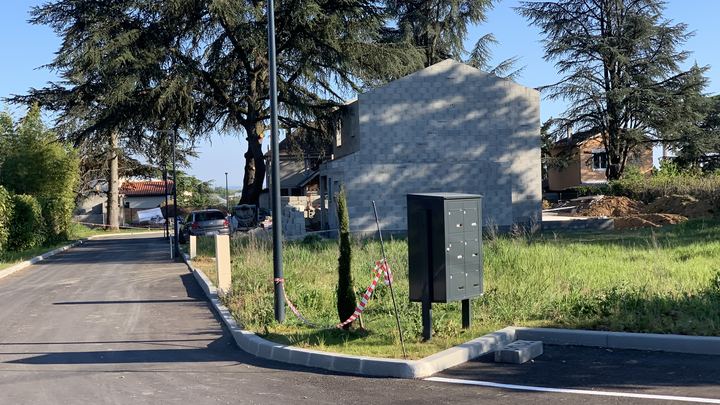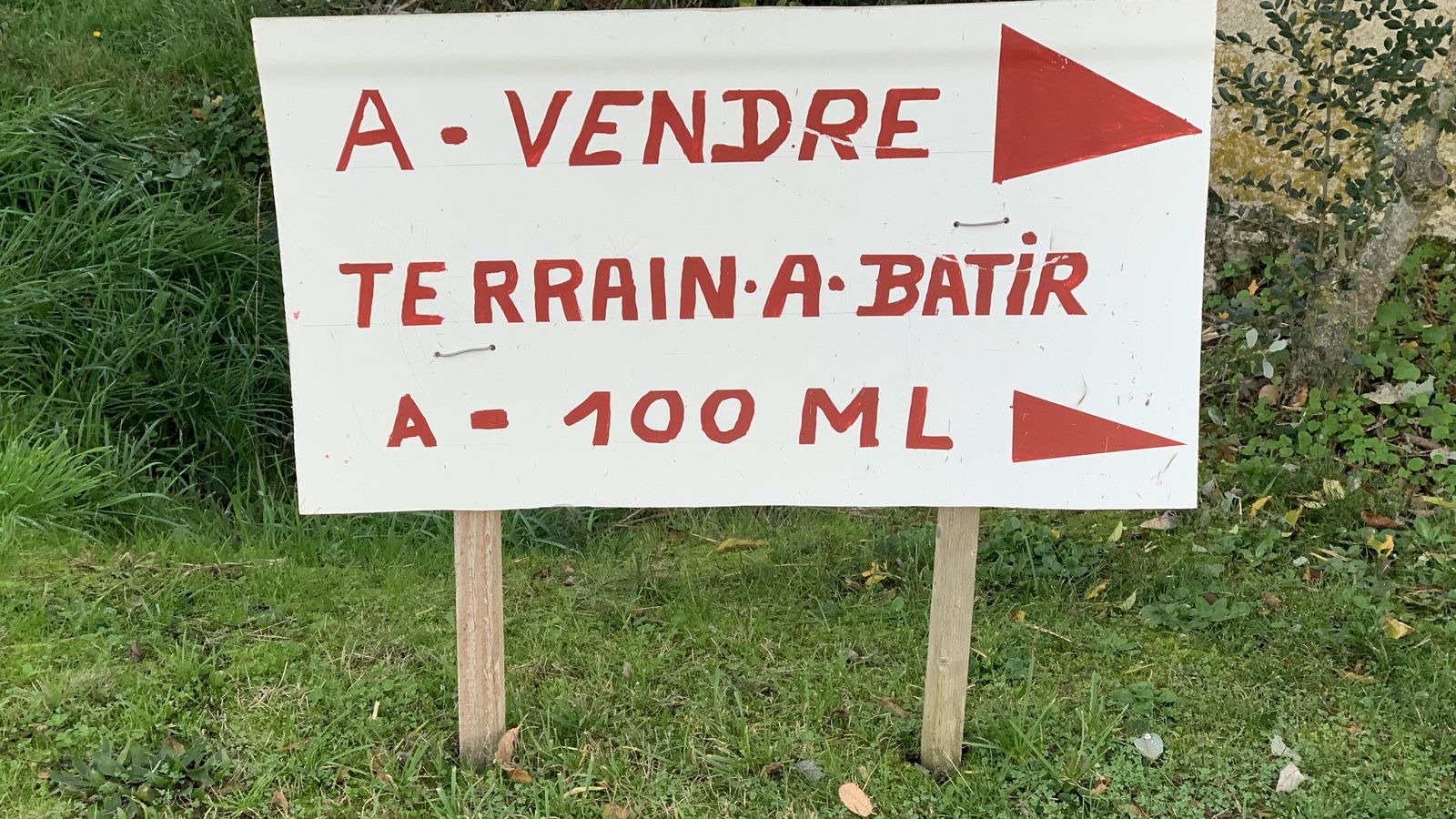
Is your garden too big to mow? It may be big enough for one more house.
A large garden in a building zone can be worth far more split into building plots than sold with the house. You still need to follow the right steps, in the right order. Here is the complete process, from the first checks to the signing at the notary's office.
1. Check that the division is possible
Everything starts with the town's planning document: the local urban plan (PLU, or PLUi when it covers several towns), a simpler municipal map, or failing that the national planning rules. You need to identify the zone of your plot (a U zone, or an AU zone open to development, is required) and then read the rules that govern any future building: maximum footprint, height, distances from boundaries and from the road, share of green space, parking.
Since the ALUR Act of 2014, there is no longer a minimum plot size or floor-area ratio: it is the combination of rules that decides whether a detached plot remains buildable, and whether the existing house still complies once its land is reduced.
The right reflex: apply for an operational planning certificate (CUb). The town hall has two months to reply. It states whether the planned operation is feasible and freezes the planning rules for 18 months.
2. Call in a chartered land surveyor
The géomètre-expert is the only professional authorised to set property boundaries. They carry out the boundary survey with the neighbours, then the division plan and, once permission is granted, the survey document that creates the new plots in the land register.
They will also help you design a smart layout: a well-oriented plot with direct access to the road and enough frontage sells better, and for more, than a "flag" plot reached by a long right of way.
A well-oriented plot with direct access to the road sells better, and for more, than a flag plot.
3. Obtain planning permission
Dividing land in order to build on it is legally a subdivision (lotissement), even for a single plot. Two cases:
- Prior declaration (déclaration préalable): the most common case, when the division creates no road or shared space and the land is not in a protected area. Processing time: one month in principle.
- Development permit (permis d'aménager): required if you create a road or spaces shared by several plots, or if the land is in a protected heritage site, near a historic monument or in a listed site. Processing time: three months in principle.
Once granted, the permission must be displayed on the land: third parties have two months to appeal. So be careful before signing a final sale.
4. Connect the utilities or sell "unserviced"
A serviced plot is connected (or connectable at the plot boundary) to drinking water, electricity, sewerage and possibly gas and fibre. You can carry out this work before the sale or leave it to the buyer, adjusting the price.
The cost varies widely depending on the distance to the networks and the type of soil: ask the utility providers for quotes. If the town has no mains sewer, plan a soil study for an individual sewage system.
5. The soil study, compulsory in some areas
Since the ELAN Act, the seller of an undeveloped building plot located in an area with medium or high exposure to clay shrinkage and swelling must provide a preliminary geotechnical study. It is attached to the sale agreement and remains valid for 30 years. The exposure map can be consulted on georisques.gouv.fr.
6. The costs to budget for
Every plot is different; here are the items to get quotes for before deciding:
- boundary survey and division plan by the land surveyor;
- preparation of the planning application (often included in the surveyor's assignment);
- geotechnical study if your town is concerned;
- utility connections, if you service the plot;
- possible work on the house you keep: fencing, new access, moving a meter or a septic tank.
Set against the price of a building plot in your town, this budget quickly tells you whether the operation is worthwhile.
7. Tax: capital gains and above all VAT
Capital gains
The capital gains exemption for your main residence does not apply to a building plot detached and sold separately. Any gain is taxed, with allowances for the length of ownership: full exemption from income tax after 22 years and from social charges after 30 years. Some towns also apply a tax on the sale of land that has become buildable.
VAT: the real risk
A private individual selling land from their private assets does not pay VAT. They become liable for it, at 20%, if they act like a developer: significant servicing work carried out by them, a split into several plots, active marketing (CJEU, Słaby and Kuć, 2011).
The reform applicable from 1 January 2027 makes the calculation tougher: for land that was inherited or bought from a private individual, this VAT will apply to the total price and no longer just to the margin. On land resold for €200,000, the difference can reach €25,000.
It also affects the professional buyers who purchase and resell land: their offers for land bought under the new doctrine are likely to fall. A preliminary agreement signed before 31 December 2026 in principle keeps the former regime for them (ministerial answer of 1 October 2026).
Our advice: do not service the land yourself or sell several plots without advice, sign the preliminary agreement before the end of the year if you are selling to a professional, and have the structure validated by your notary.
8. How long does it take?
Between the first study and the signing of the deed, allow generally six months to a year: planning checks, surveyor's work, processing of the permission, third-party appeal period, then marketing and the town's possible pre-emption period.
Our approach
Before you incur any costs, we review your land free of charge: actual buildability, possible layouts, value of the plots compared with a single sale. Within 48 hours, you know whether dividing makes sense for you.
Frequently asked questions
Does a private individual dividing their land have to pay VAT?
In principle no: selling land from private assets is outside VAT. But if the seller services the land themselves, splits it into several plots and markets them like a professional, they may be liable for 20% VAT. With the reform, for inherited land or land bought from a private individual, this VAT may apply to the total price rather than just the margin.
Do I need a permit to divide my land?
Yes, as soon as the division aims to create a building plot. A prior declaration is enough in most cases; a development permit is required if the operation creates a road or shared spaces, or if the land is in a protected area.
Can I sell a divided plot without servicing it?
Yes. The land is then sold "unserviced" and the buyer pays for the connections, which is reflected in the price. The listing must say so clearly.
Is selling part of my garden taxable?
Generally yes: the main residence exemption does not cover a building plot sold separately. Allowances for length of ownership reduce the tax, up to exemption after 22 years (income tax) and 30 years (social charges).
Sources: Code de l’urbanisme, articles L. 442-1, R. 421-19 et R. 421-23 (lotissement : permis d’aménager ou déclaration préalable) · Code de l’urbanisme, article L. 410-1 (certificat d’urbanisme, règles figées 18 mois) · Loi n° 2018-1021 du 23 novembre 2018 « ELAN », article 68 (étude géotechnique préalable) · Code général des impôts, articles 150 U et 150 VC (plus-values immobilières, abattements pour durée de détention) · CJUE, 15 septembre 2011, Słaby et Kuć, C-180/10 et C-181/10 (assujettissement à la TVA) · Ordonnances n° 2025-1247 du 17 décembre 2025 et n° 2026-671 du 27 juillet 2026 (réforme de la TVA immobilière, 1er janvier 2027) · Réponse ministérielle n° 08332 (JO Sénat, 1er octobre 2026) · georisques.gouv.fr
Sounds like your property?
Tell us about it: we look at your case with you, with no commitment.
Get a free opinionOur guide: Building land →Read next