You have inherited a house, a large plot and everyone's opinion. Sell quickly, or split first?
Inheriting a family property almost always raises the same question: should you sell it quickly as it is, or take the time to look at dividing it before putting it on the market? The answer depends on the property, the market and, above all, how well the heirs get on.
What happens just after the death
The heirs become joint owners of the property: this is indivision. The notary draws up the property certificate (attestation de propriété immobilière) needed to sell, and the inheritance tax return must in principle be filed within six months of the death, with payment of the duties. Nothing requires you to wait for the estate to be fully settled before selling; however, all the joint owners must agree to the sale.
When selling as it is is the right option
Selling quickly, with no work or procedures, is often the right choice when:
- the property is in good condition and easy to present;
- the heirs agree on the price and the timing;
- the local market is active for this type of property;
- some heirs need cash, for example to pay the inheritance duties.
It is also the solution that limits the maintenance, property tax and insurance costs of an empty property, which add up quickly when nobody lives there.
An independent valuation and clear scenarios often bring the whole family into agreement.
When to consider dividing before selling
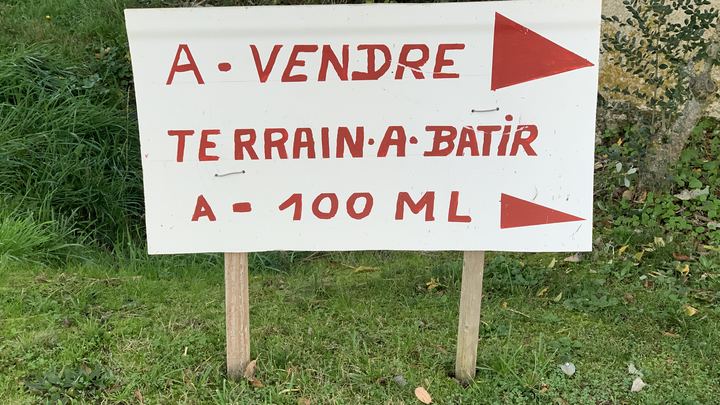
A large property with a sizeable plot, separable outbuildings or favourable zoning can be worth considerably more sold in several parts: the house with a reasonable garden on one side, one or more building plots on the other. But a division takes time (surveyor, planning permission, sometimes servicing) and the agreement of all the heirs at every step. It only makes sense if the expected gain justifies these delays and costs.
The heirs' agreement, the key to everything
In joint ownership, selling requires unanimity in principle. When heirs holding at least two thirds of the rights want to sell, however, they can start the procedure provided by article 815-5-1 of the Civil Code before a notary, which can lead to a sale authorised by the court. Before getting there, an independent valuation and a clear presentation of the different scenarios (selling as it is, dividing, one heir buying out the others) often bring everyone into agreement.
If the surviving spouse has a life interest in the property, their agreement is also needed; the price is then shared between the life interest and the bare ownership.
The tax to anticipate
An inherited property is not the heirs' main residence: any capital gain is taxable. It is calculated on the difference between the sale price and the value stated in the inheritance tax return, with allowances for length of ownership counted from the death. Selling soon after the death, at a value close to the one declared, therefore often limits the gain. Your notary will make the exact calculation.
How to decide?
Put the scenarios side by side, with figures: likely sale price as it is, prices of the different parts after division, costs, timescales, tax and each heir's needs. This is the work we do, free of charge and with no commitment, to help the family choose with full knowledge of the facts.
Frequently asked questions
Can a property be sold before the estate is settled?
Yes, once the notary has drawn up the property certificate and all the heirs agree. The price can be used to pay the inheritance duties.
What if an heir refuses to sell?
Heirs holding at least two thirds of the rights can start the procedure of article 815-5-1 of the Civil Code before a notary. An amicable solution is usually quicker.
Is an inherited property subject to capital gains tax?
Yes, if it is not the seller's main residence. The gain is calculated from the value stated in the estate, with allowances based on the length of ownership since the death.
Sources: Code général des impôts, article 641 (déclaration de succession dans les six mois) · Code civil, article 815-5-1 (vente à la majorité des deux tiers des indivisaires) · Code général des impôts, articles 150 U et 150 VC (plus-values immobilières, abattements pour durée de détention)
Sounds like your property?
Tell us about it: we look at your case with you, with no commitment.
Get a free opinionOur guide: Inherited property →Read next