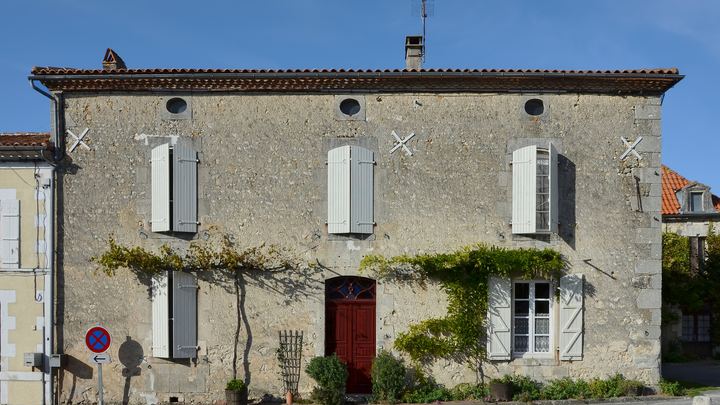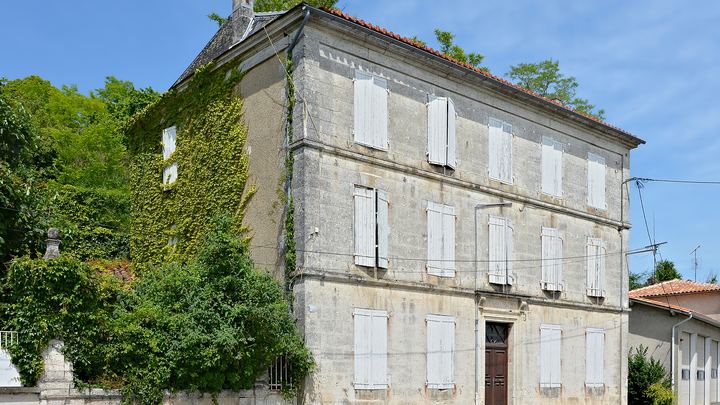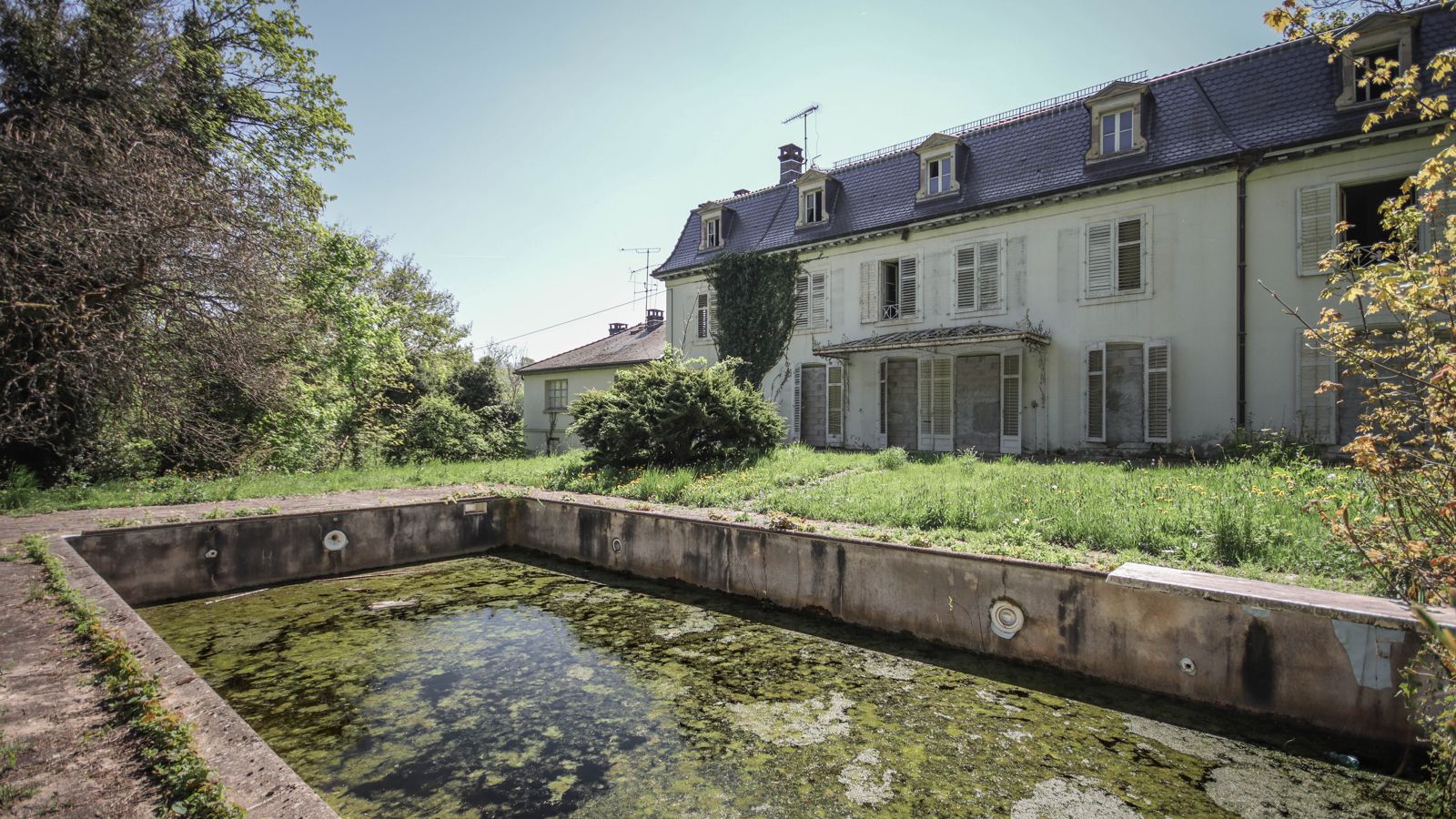
A château in the family sounds very smart in conversation. Much less so on the property tax bill.
A large family home, grounds, outbuildings, and a frightening maintenance bill. Inheriting a large property is a gift that can quickly become a headache. Before deciding, you need to look at the property as more than just a house.
The questions to ask first
- Who wants what? One heir may want to keep it, others need cash.
- How much does it cost to keep? Property tax, insurance, heating, upkeep of the grounds and the roof: the annual budget of a large property is often underestimated.
- What condition is it in? Roof, structure, utilities, damp: the major works ahead weigh on every decision.
- What exactly does it include? House, outbuildings, grounds, land, woodland, furniture: a precise inventory is needed for the valuation as well as for the inheritance tax return.
Why these properties are hard to sell
The market for large properties is narrow: few buyers have the budget, the desire and the ability to maintain a residence of several hundred square metres all at once. A conventional listing, with a price calculated per square metre, attracts few viewings and plenty of the merely curious.
The local price per square metre means little for a residence surrounded by grounds and outbuildings: comparable sales are rare, sometimes far away, and have to be searched for over several years in the public sales data (the DVF database). The valuation is built instead on what the property makes possible, and on what keeping it will cost the buyer.
The property is then sold for what it makes possible.
Ways to make the most of the property
Bed and breakfast, holiday cottages, events venue, artists' residence, company headquarters. The property is then sold for what it makes possible.
The house with reasonable grounds on one side, outbuildings or land on the other, if the planning rules allow it.
The residence divided into several homes, often by a professional buyer; or one part kept by the family and the rest sold.
Separating lots involves a planning procedure: our article on the steps, timescales and costs of dividing land sets it out. And when the residence lends itself to several homes, the question becomes that of selling unit by unit or as a whole.
Do not forget the estate
The inheritance tax return must be filed within six months of the death (twelve months if the death occurred outside France), and the duties are paid when it is filed. After this deadline, late-payment interest of 0.20% per month is added, and a surcharge may follow. This timetable sometimes pushes families to sell too quickly.
For a child, the duties are calculated on their share after the allowance, on a progressive scale from 5% to 45%. On a large property, the sum rises quickly.
Worked example: the duties on a family home
A case built for illustration: a widowed parent leaves their three children a property valued at €900,000, with no other assets, no debts and no previous gifts.
| Each child's share | €300,000 |
| Allowance | − €100,000 |
| Taxable share | €200,000 |
| Duties per child (direct-line scale) | €38,194 |
| Duties for the three children | €114,583 |
If no one has this sum, payment in instalments can be requested with the return, with the agreement of all the heirs, guarantees and interest. The proceeds of a sale can also be used to pay the duties. In joint ownership, the sale requires everyone's agreement, or the two-thirds rule procedure before a notary; since the Act of 7 April 2026, the court can also, under certain conditions, authorise one co-owner to sell. See what to do when an heir refuses to sell and whether it is better to sell or divide first. The notary remains the key contact for the timetable and the tax.
Is the property a listed or registered historic monument? The heirs may be exempted from inheritance tax if they sign an agreement with the State which provides in particular for opening to the public and upkeep, often with no time limit. Failing to comply with it means losing the exemption: before selling, have the notary check the consequences.
The steps, in order
A calm decision generally follows the same path, whatever the scenario chosen.
- Bring the heirs and the notary together: certificate of ownership, timetable for the return.
- Draw up the inventory: buildings, land, furniture, easements, any protections.
- Put a figure on what keeping it costs: property tax, insurance, heating, routine upkeep.
- Value the property under several scenarios: sale as a whole, in lots, to a project.
- Decide together, then target the buyers who match the chosen scenario.
Mistakes to avoid
- Advertising a price per square metre: it says nothing about the value of an estate and attracts the wrong buyers.
- Selling in a rush to pay the duties, without having looked into payment in instalments.
- Leaving the property closed and unwatched while the family hesitates: it deteriorates, still costs money and can attract occupants.
- Moving forward without all the heirs: a single disagreement can block a sale that has already been negotiated.
Our approach
We look at the property as a whole, its strengths and its constraints, and we identify the buyers and scenarios that make sense. The family can then decide on a concrete basis. See also our guide to selling an inherited property.
Frequently asked questions
How long does it take to sell a large property?
Often longer than a conventional house, because the market is narrow. Targeting the right buyers and presenting the potential of the place shortens this time.
Can part of the land of an inherited property be sold?
Yes, if the planning rules allow it and the heirs agree: a division can make the sale easier.
Should works be carried out before selling?
It is not an obligation. Buyers of large properties often build the works into their project; it is better to compare the scenarios first.
Can inheritance tax be paid in several instalments?
Yes, on a request attached to the return and with the agreement of all the heirs. When at least half of the inheritance consists of non-liquid assets, such as a building, payment can be spread over three years in seven instalments, with interest and guarantees.
Is an inherited historic monument subject to inheritance tax?
It can be exempted if the heirs sign an agreement with the State on opening to the public and upkeep (article 795 A of the General Tax Code). Failing to comply with the agreement means losing the exemption.
Sounds like your property?
Tell us about it: we look at your case with you, with no commitment.
Get a free opinionRead next