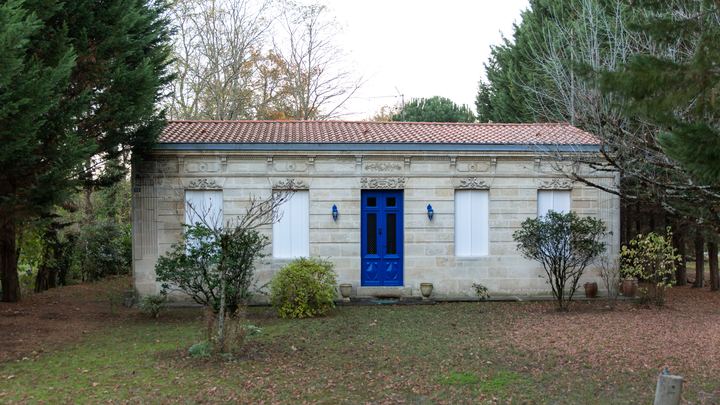
The house waits, shutters closed. The taxman counts the days.
When a parent moves into a care home, their house often stays closed, waiting. Yet time matters: sold within two years, it can escape all capital gains tax; a year later, the bill can exceed €10,000. Today's rules, and what the 2027 budget could change.
An exemption that lasts only two years
The home you live in is exempt from capital gains tax when you sell it. But a parent who has moved into a care home no longer lives there: on the day of the sale, it is no longer their main residence. The French General Tax Code therefore provides a special exemption for people living in an establishment for elderly people (nursing home, independent-living residence, small care unit) or for disabled adults (residential home, medicalised care home, specialised care home).
Four conditions must be met at the same time:
- The house was their main residence before they moved into the establishment.
- It has stayed empty since they left: not let, not lent, even free of charge, even for a few weeks. Only the spouse, the partner or a dependant who already lived there may continue to occupy it.
- Their income is modest: the reference taxable income for the year before last does not exceed a ceiling set each year (€30,024 for one tax unit for a sale in 2026, increased per half-unit), and they were not liable for the real estate wealth tax that same year.
- The deed of sale is signed less than two years after moving into the establishment. What counts is the date of the deed at the notary's, not that of the preliminary sale agreement.
What the October 2026 vote could change
Two years is short: you have to accept the idea of selling, empty the house, sometimes obtain a judge's approval, then find a buyer.
As of 18 October 2026, nothing is final. On 16 October, the National Assembly adopted in plenary amendment I-339 to the 2027 finance bill: it replaces "two" with "three" years in this exemption. It also adopted amendment I-367, which would keep the exemption for a former main residence lived in for at least 22 years, sold within 36 months of leaving, without having been let. These votes may still fall: the vote on the first part of the budget is scheduled for 20 October, followed by the Senate. No date of application has been set.
It is therefore better to prepare the sale as if the two-year rule remained in place. If the extension is confirmed, it will be a safety margin, not a reason to wait.
If the extension is confirmed, it will be a safety margin, not a reason to wait.
What a missed deadline costs
Without the exemption, the capital gain is taxed at 19% income tax and 17.2% social charges, with allowances depending on the length of ownership: exemption from income tax after 22 years, from social charges after 30 years. Even when owned for a long time, a house sold after the deadline rarely costs nothing.
Example with figures: the same sale, before and after the deadline
A fictitious case. A mother bought her house for €120,000 in June 2003. She moves into a care home in March 2025; her income is below the ceiling. The house sells for €260,000 at the beginning of 2027, after 23 years of ownership. Calculation using the statutory flat rates of 7.5% for purchase costs and 15% for works.
| Purchase price plus flat rates | €147,000 |
| Gross capital gain | €113,000 |
| Income tax (more than 22 years of ownership) | €0 |
| Deed signed in February 2027, within two years | €0 |
| Deed signed in April 2027: social charges of 17.2% after a 37% allowance | about €12,200 |
If owned for less than 22 years, the house would also bear income tax. Illustrative orders of magnitude: the notary makes the exact calculation.
If the deadline is missed, all is not lost: a retired parent on a very low income may qualify for another exemption, reserved for recipients of an old-age pension below a lower income ceiling. The notary checks this before calculating the tax.
The steps, in order
- Note the date of entry and the deadline. Count two years until the deed, and aim to put the house on the market after ten months at the latest.
- Check the conditions. Tax notice for the year before last, no real estate wealth tax, house kept empty.
- Know who will sign. The parent themselves, a relative holding a power of attorney or a family authorisation; under guardianship, the sale of the home requires the judge's approval, which adds several months.
- Empty the house and carry out the surveys. Sort through belongings, then the mandatory surveys, including the energy performance certificate (DPE), and an energy audit if the house is rated E, F or G.
- Set the price on actual sales. Compare with sales in the area, not with listings.
- Have the exemption stated in the deed. The notary indicates its legal basis; no return needs to be filed.
A house that has been closed for months shows badly, and buyers price that in generously: airing it, cleaning it and opening the shutters often changes the offer.
The mistakes that lose the exemption
- Letting or lending the house in the meantime to cover care home fees: even a grandchild housed free of charge for a few months is enough to lose everything.
- Confusing the preliminary agreement with the deed: a preliminary agreement signed before the deadline offers no protection if the deed is signed after it.
- Waiting until the last year: between the offer and the deed, allow three months, longer with a judge's approval.
- Forgetting that a death changes everything: if the parent dies before the sale, the house becomes part of the estate and the children sell under other rules, often in joint ownership.
If the house does not find a buyer, see the real causes of an unsold house. If it passes to the children, read whether to sell or divide first in an estate, and in case of deadlock, what to do when an heir refuses to sell.
Our approach
We help families sell a parent's house in time, in liaison with their notary: a price based on actual sales, targeted buyers, a timetable kept right up to the deed. Tell us about the house: reply within 48 hours, with no commitment.
Frequently asked questions
Does the two-year period run from moving into the care home or from leaving the house?
From moving into the establishment, provided the parent lives there without interruption. If the parent first lived with one of their children, the house must have stayed empty since they left.
Can the house be let to pay for the care home?
Yes, but the exemption is then lost, even for a short let or a free loan. The expected rent must be compared with the tax that will be due on the sale.
Is the three-year period already in force?
No. As of 18 October 2026, it has only been adopted by the National Assembly at first reading, in the draft 2027 budget, and may still be removed.
Can the children sign the sale on the parent's behalf?
Yes, with a notarised power of attorney or a family authorisation. If the parent is under guardianship, the sale of their home must be approved by the judge.
What happens if the parent dies before the sale?
The house becomes part of the estate. The heirs receive it at its value on the day of death, and the capital gain is calculated from that value.
Sounds like your property?
Tell us about it: we look at your case with you, with no commitment.
Get a free opinionRead next