A house cracked by drought can be sold, provided you disclose everything: risk report, paid claims, expert report. It is silence that costs dearly.
Yes, you can sell a house cracked by drought, provided you tell the buyer everything: known cracks, claims paid under a natural disaster declaration, which must appear in the risk report (état des risques), and the expert report if there is one. A crack kept quiet or hidden exposes the seller to the sale being cancelled or the price reduced, even with an "as is" clause. The price starts from a comparable house, minus the cost of repairs assessed by an expert: without a figure, the buyer assumes the worst.
Why so many cracked houses right now
Clay soils shrink when they dry out and swell when the rain returns: foundations move and walls crack, often in autumn. On 3 November 2026, INSEE published an overview of climate risks: 34% of homes are exposed to clay shrink-swell. The new official zoning, in force since 1 July 2026, classifies 55% of mainland France as medium or high exposure, against 48% in 2020.
In Gironde, an order of 16 October 2026, published in the Journal officiel on 23 October, recognised a natural disaster for the 2025 drought in Camarsac, Coimères, Saint-Jean-de-Blaignac and Saint-Laurent-du-Bois. Owners there have 30 days from publication to notify their insurer, i.e. until 22 November 2026.
What the seller must tell the buyer
The risk report. It is handed over at the first viewing, less than six months old, then attached to the preliminary contract. It states whether the house is in a clay zone and lists claims paid under a natural disaster declaration. If it is missing from the contract, the buyer's cooling-off period only starts when it is provided; if it is false or incomplete, the buyer can seek cancellation or a price reduction (article L. 125-5 of the Environment Code). The listing must also refer to the Géorisques website: see the listing mistakes that put buyers off.
The expert report. For damage occurring since 1 January 2024 (decree no. 2024-82), a seller holding the insurer's expert report attaches to the risk report the list of repairs that were compensated, or are eligible for compensation, but have not been carried out.
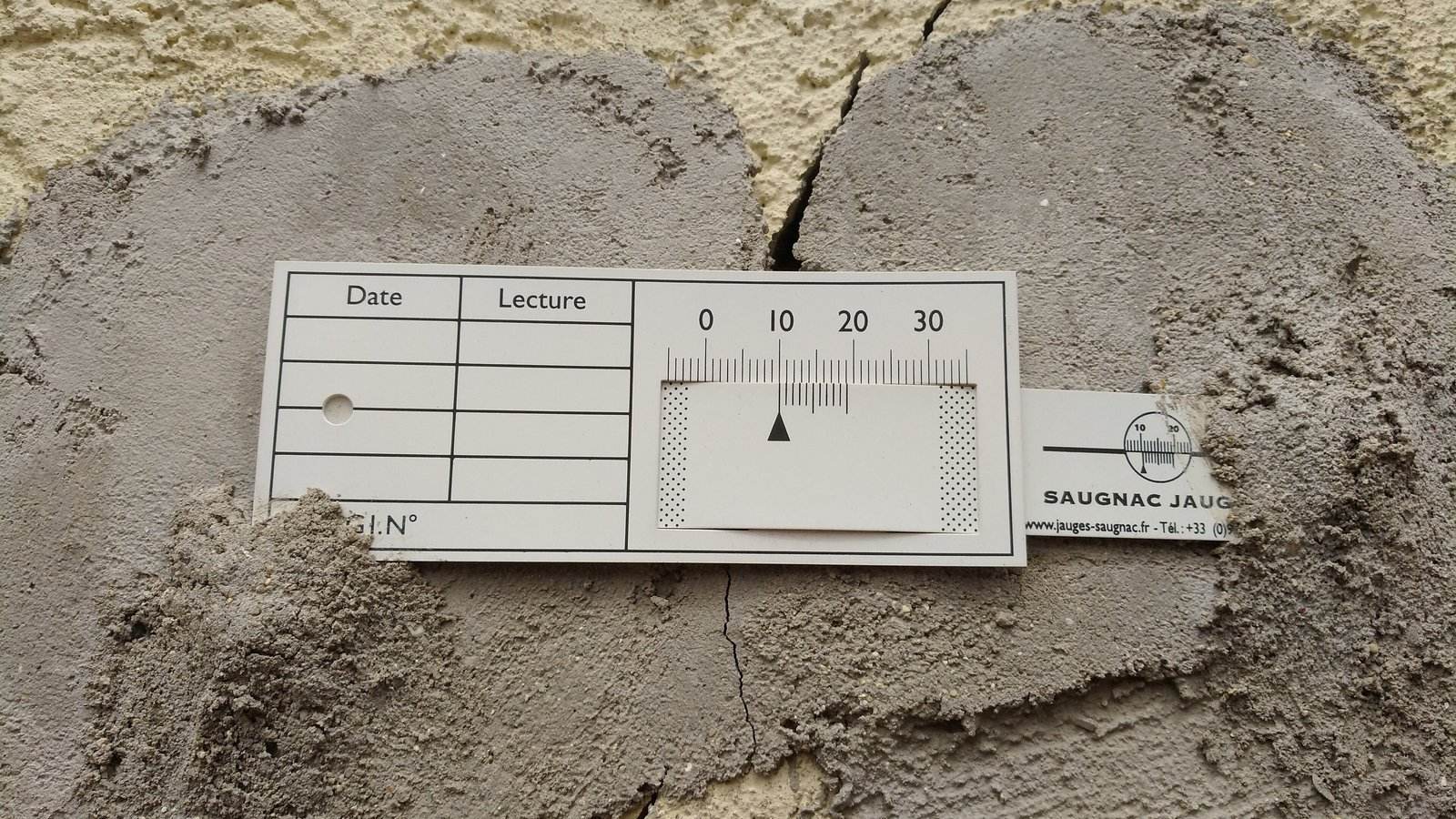
Known cracks, even if never claimed: write them into the contract, with the date they appeared, photos and, if any, readings from crack monitors.
A soil survey is only compulsory to sell building land in an exposed clay zone, not an existing house. If you have one, hand it over.
Never hide a crack before viewings. A coat of render or paint, a piece of furniture in front: a seller who knew of the defect acts in bad faith, and the clause excluding the hidden defects warranty no longer protects them (article 1643 of the Civil Code). The buyer has two years from discovery to act (article 1648).
A crack shown, explained and written into the deed is no longer a hidden defect.
A crack shown is a sale protected
The seller is not liable for visible defects the buyer could see for themselves (article 1642 of the Civil Code). A crack shown, explained and written into the deed is therefore no longer a hidden defect. That is the seller's best protection, far more than a standard clause. Details in our article on selling a house in poor condition without a hidden defects warranty.
How much value does a cracked house lose?
No serious study puts a figure on the discount for a cracked house: it depends on how severe the damage is and above all on what the buyer knows. Beware of flat percentages. The buyer starts from a comparable house in good condition, deducts the repairs, then a margin for uncertainty. Their bank may ask for the expert report or quotes.
Worked example: cracked house in the Entre-deux-Mers
Fictitious case: house built in 1985, cracks in the walls after the 2025 drought. Comparable undamaged houses have sold for around €260,000 locally.
| Price of a comparable house without cracks | €260,000 |
| Repairs assessed by the expert (assumption) | − €30,000 |
| Buyer's margin for the unexpected (assumption: 20% of repairs) | − €6,000 |
| Realistic price with a complete file | ≈ €224,000 |
Without an expert report, the same buyer often imagines €60,000 of repairs and keeps a 30% margin: they offer about €182,000, i.e. €42,000 less. The assessment costs far less than it earns.
Sell before or after the insurance payout?
Since the reform that took effect in 2024, only damage affecting the soundness of the house or preventing its normal use is compensated, and the payout is intended for repairs. Three situations arise:
Invoices, contractors' guarantees, stabilised damage: the price gets close to the market, but it often means waiting months.
What happens to the payout and the repairs is settled in writing in the preliminary contract, with the notaire and the insurer.
No payout: the house is sold as is, on the basis of an assessment, to an informed buyer.
Preparing the sale in five steps
In every case, the quality of the file is what protects the price.
- Gather the file: risk report, natural disaster orders (Géorisques), claims to the insurer, expert report, dated photos.
- Have the repairs assessed by the insurer's expert or an engineering firm.
- Write everything into the contract: cracks, claims, payout.
- Set the price on actual sales: our barometer of actual prices gives benchmarks for each town.
- Show the cracks during viewings, file in hand.
If the house has been on the market for months without an offer, see when and by how much to lower the price.
Our approach
We sell cracked houses from La Rochelle to the Basque Country: a complete file from the first viewing, a price based on actual sales and the repair assessment. Let's talk about your house: reply within 48 hours.
Frequently asked questions
Can you sell a cracked house in France?
Yes. No rule requires repairs before selling, but the buyer must be informed: known cracks, natural disaster claims in the risk report, the expert report if there is one.
Must I disclose cracks and the natural disaster to the buyer?
Yes. Claims paid under a natural disaster declaration must appear in the risk report; otherwise the buyer can seek cancellation or a price reduction. A crack known and kept quiet can be ruled a hidden defect, even with an "as is" clause.
How much value does a cracked house lose?
There is no reliable figure: the discount depends on severity and uncertainty. The realistic price is that of a comparable house, minus assessed repairs and the buyer's safety margin.
Sell before or after the insurance payout?
After repair, the price is better but you have to wait. During the claim, the payout and repairs are settled in writing in the preliminary contract, with the notaire and the insurer.
Is a soil survey compulsory to sell a house?
No. It is compulsory to sell building land in an exposed clay zone, not an existing house. If a survey exists, give it to the buyer.
Sounds like your property?
Tell us about it: we look at your case with you, with no commitment.
Get a free opinionRead next